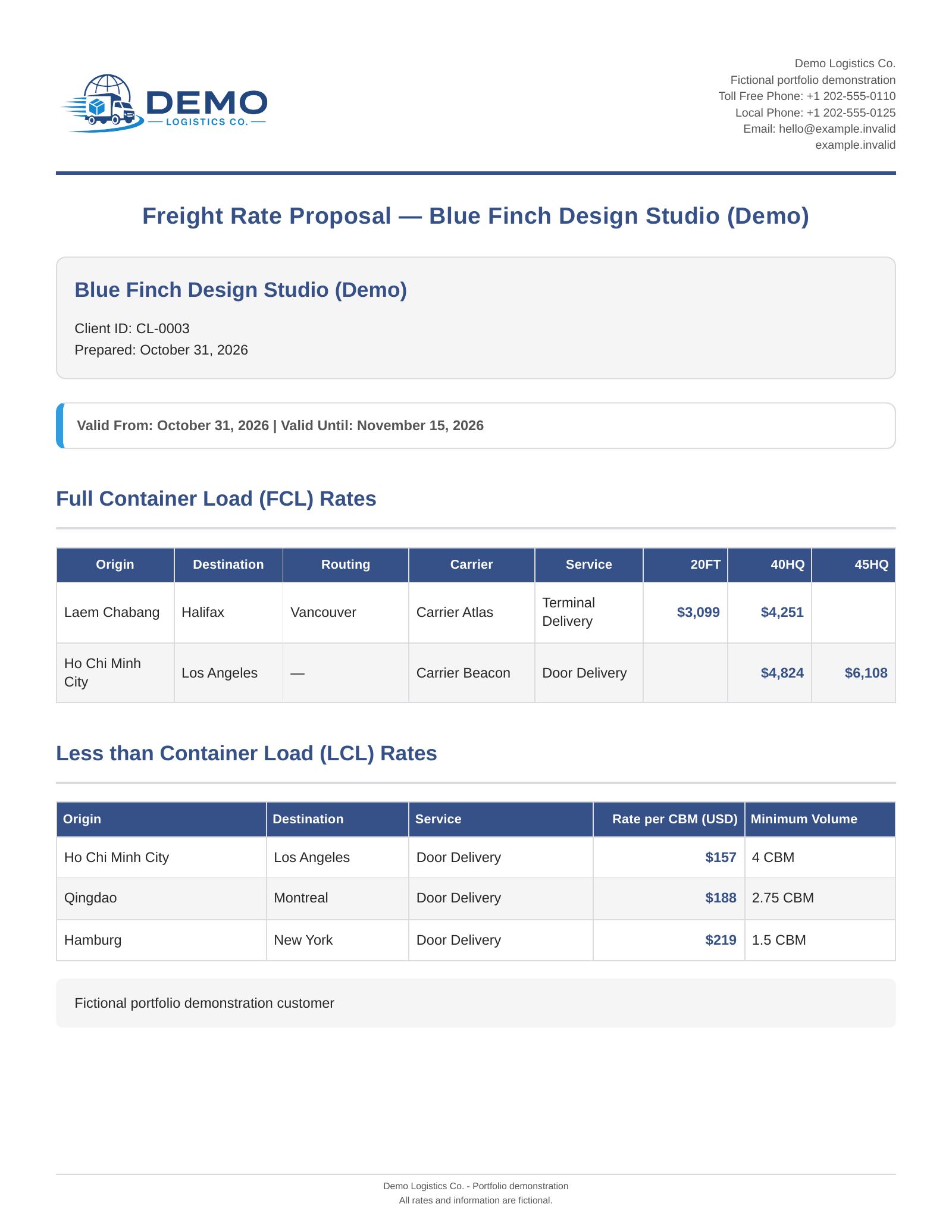
Logistics rate sheets
Matches requested routes to cost data, applies pricing rules, holds exceptions for review, and generates a client-ready PDF.
Matches routes to cost data, applies pricing rules, holds exceptions for review, and generates a PDF.

Workflow automation consulting
I turn disconnected spreadsheets, manual handoffs, and complicated business rules into reliable systems, so your team spends less time moving information and more time using it.
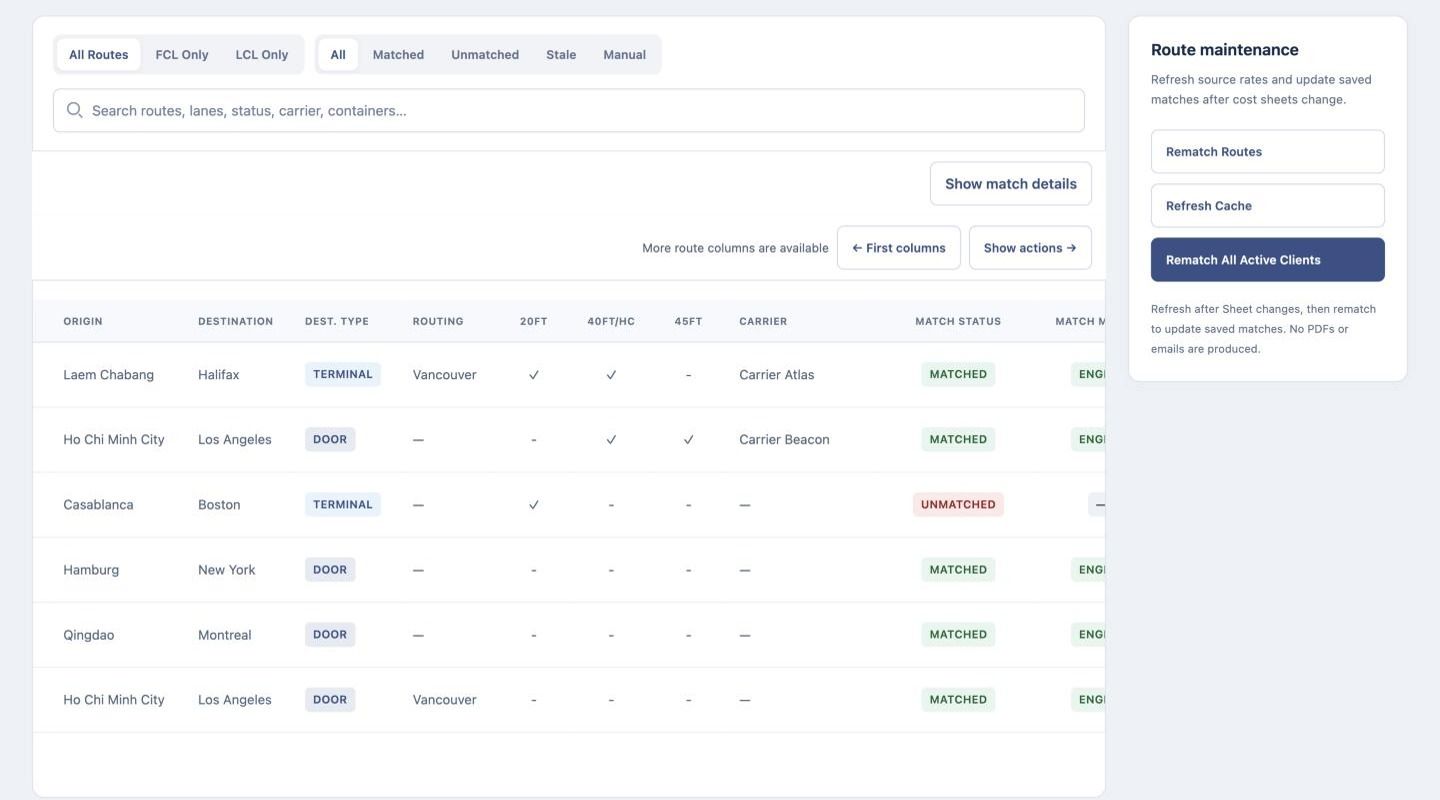
Selected work
Matches requested routes to cost data, applies pricing rules, holds exceptions for review, and generates a client-ready PDF.
Matches routes to cost data, applies pricing rules, holds exceptions for review, and generates a PDF.
Publishes a PR agency's opportunities from one master pipeline to about 30 client trackers, and keeps each one current until coverage is secured.
Publishes a PR agency's opportunities from one master pipeline to about 30 client trackers.
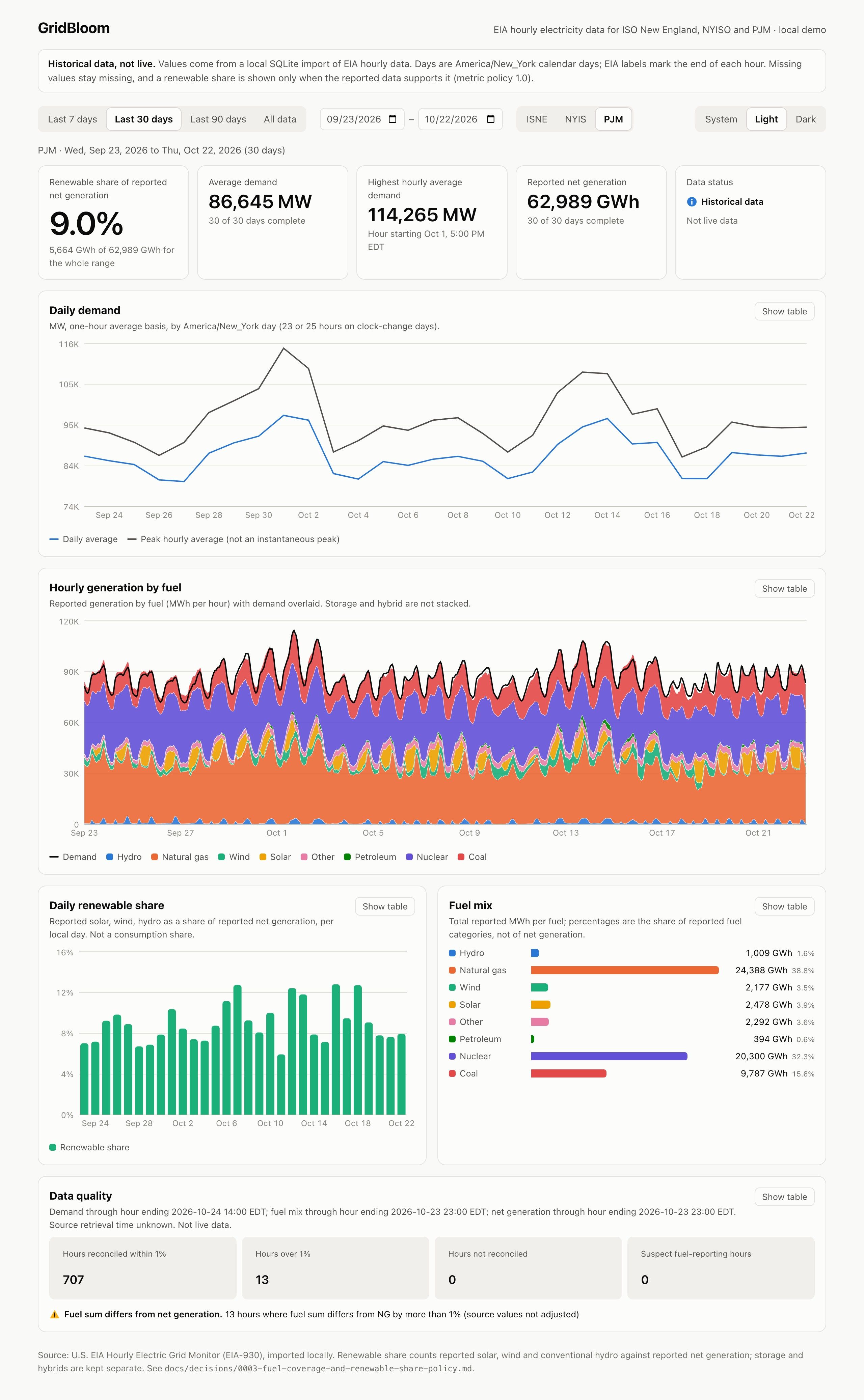
A data pipeline, dashboard and weekly report that withhold figures the data can't support, with an AI briefing whose every number is checked.
A pipeline, dashboard and weekly report that withhold unsupported figures, with a checked AI briefing.
Problems I work on
Each of these is a process that works, but only because people keep it working by hand. Each links to the service and a project that addresses it.
And the copies drift apart until someone notices.
Integrations and data syncIntegrations · PR pipeline example
Quotes wait when that person is out, and exceptions are handled from memory.
Operational applicationsOperational apps · Logistics example
Exports, pasting, reformatting, then writing the summary.
Reporting and AI-assisted workflowsReporting · GridBloom example
Every version is a chance for a stale number to slip through.
Operational applicationsOperational apps · Rate-sheet PDF exampleRate-sheet example · Word reference example
Reconciling them is a recurring chore with no record of what changed.
Integrations and data syncIntegrations · PR pipeline example
The roster is never quite current, and roles get merged by hand.
Operational applicationsOperational apps · Volunteer roster exampleVolunteer example
Featured project
A logistics rate-sheet application that takes a client's requested routes and cost data, applies the pricing rules consistently, and stops for review wherever the data does not fit the rules.
Demo uses fictional routes and sample ratesFictional routes and sample ratesServices
Small, purpose-built tools that hold your business rules, so the process does not depend on who is in the office.Purpose-built tools that hold your business rules, so the process does not depend on who is in the office.
Addresses
Connections between the tools you already use, with reconciliation so you can see what changed and what needs a decision.Connections between the tools you use, with reconciliation so you can see what changed.
Addresses
Dashboards fed directly from your sources, and, where it helps, a language model that drafts research or summaries for a person to check.Dashboards fed from your sources, and model-drafted summaries that a person checks.
Addresses
How a project runs
I learn how the work actually runs today, who touches it, and where it slows down.How the work really runs, and where it slows down.
We write down the rules, the edge cases, and which decisions stay with your staff.Which decisions stay with your staff.
I build in stages and review each one with you against real or realistic cases.In stages, against realistic cases.
You get written documentation of how it works and how to change it.Written documentation of how to run and change it.
Scope, deliverables and any ongoing support are agreed in writing for each engagement before work begins.Scope and any ongoing support are agreed in writing for each engagement.
What clients say
“If your systems feel like a tangled plate of spaghetti and you’d rather have a neat picket fence, this freelancer is for you.”
“Super responsive/communicative. Fantastic to work with.”
“Amazing to work with, she went above and beyond. She far exceeded my expectations.”
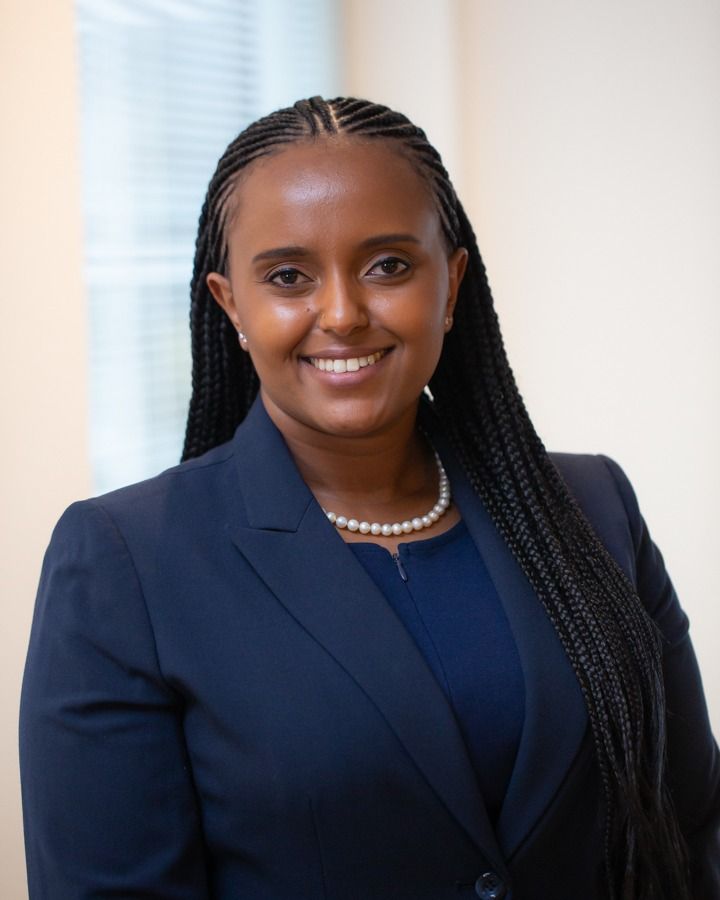
Who you will work withWho you work with
I'm an engineer and software developer. Earlier in my career I worked as a patent technical specialist, where the job was reading dense technical material closely and describing exactly what a system does. I bring the same care to your operations: I learn the process, including its exceptions, before I write any code.
Regassa Automations is just me. You work with me directly, from the first conversation to the handoff.
An engineer and software developer, formerly a patent technical specialist. I learn your process, including its exceptions, before I write any code. You work with me directly, from first conversation to handoff.
More about my background and approachMore about my backgroundDiscuss your workflow
A few sentences is enough. You do not need to know what the solution looks like.A few sentences is enough. I read every inquiry myself and reply if it looks like a fit, or tell you if it is not.
Prefer to pick a time? Book a free consultation (opens in a new tab).
Inquiry sent
I will read it and reply to . If the workflow looks like a fit, my reply will suggest a time for a short conversation.
Want to skip the back-and-forth? Pick a time for a free consultation (opens in a new tab).